
Specialization: Sociology & Anthropology
Session Starts – August 2027
Duration – 4 Years
Residential Degree Program
AY 2027 UG Scholar's Round Open
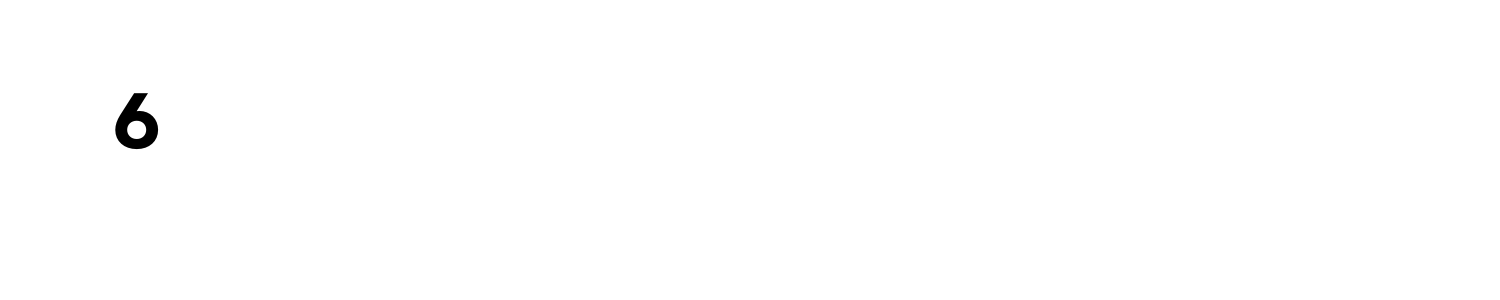
In this specialization, students will be able to comprehend the impact of social structures and culture on individual and group behaviour, critically evaluate their own set of ideas and those of others, value human diversity in all its representations, exhibit an ethic of service for the socially and culturally marginalised, and conduct a well-evaluated social research project.

Semester 1
+| Course Title |
|---|
| The Art of Inquiry: Critical Reasoning & Analysis |
| Language as Cultural Prism: Spanish |
| Ideas of Emerging New India |
| Environmental Education & UN SDGs |
| Computational Methods for Humanistic Inquiry: Digital Future Lab |
| Being human and beyond: Theorizing Anthropology |
| Cultural Anthropology: The Diversity of Human Societies in Time and Space |
| Entering the World of Sociology: Society, Culture, and Social Institutions |
| Globalization, Sociology and World |
Semester 2
+| Course Title |
|---|
| Language as Cultural Prism II: Spanish |
| Mindfulness and Art of Self-Reflection |
| Planetary Systems & Environmental Thought |
| Foundations of Identity and Communication |
| Anthropology of Meaning: Myth, Ritual and Symbol |
| Past Human Societies, Cultures, and Material remains |
| Classical Theoretical Debate: Philosophy of Sociology and Science |
| Gender Identity and Society: Critical Feminist Theories |
Semester 3
+| Course Title |
|---|
| Urban Systems Laboratory: Metropolitan Challenges |
| Responsible Leadership in an uncertain world |
| Advanced Communication Skills |
| Climate Change & Business Action |
| Human Evolution, Variation, and Adaption |
| Healing Cultures: Understanding Health and Illness |
| Modern Perspectives and Debate: Contemporary Sociological |
| Intersections of Religion, History and Politics in the Modern World |
| Digital Ethnography and Networked Communities |
Semester 4
+| Course Title |
|---|
| Existential Dialogues |
| Social Innovation Practicum I: Community Systems Lab |
| Numerical Ability & Personality Refinement |
| Gender Power and International Development |
| South Asian Religion in Practice |
| Anthropological Research Methods: Ethnography and Fieldwork |
| Sociological Research Methods: Ethnography, Phenomenology and Grounded Theory |
| Migration and Diaspora: From Gender, Conflict and Climate Perspective |
Semester 5
+| Course Title |
|---|
| Research Methodology for Social Sciences |
| Ethical AI & Technology Futures |
| Career Readiness for Modern Workspace |
| Business Ethics, Law & Governance |
| Medical Pluralism and Globalization: Diverse Health care Systems |
| Computational Social Science & Big Data Analysis |
| Forensic Anthropology: Assistance in Legal Investigations |
| Urban Systems Analysis & Smart City Critique |
| Rurality, Marginality and Social Mobility |
Semester 6
+| Course Title |
|---|
| Human Rights & Humanitarian Law |
| Interdisciplinary Policy Innovation Studio |
| Rural Systems Field Lab & Cultural Observatory |
| Anthropology beyond academia |
| Linguistic Anthropology |
| Indian Anthropology |
| Sociological Perspectives of Work and Labour |
| Critical and Comparative Perspectives in the Sociology of Education |
Semester 7
+| Course Title |
|---|
| Social Impact Oriented Dissertation-I |
| Anthropology of India Tribes |
| Business Anthropology: Understanding Organizations, and Consumer behaviours within a cultural context |
| Anthropology of popular culture |
| Algorithms and Society |
| Exploring the Identity and Inequality: Caste, Tribe, Race and Gender |
| Society, Knowledge, and Philosophical Inquiry |
Semester 8
+| Course Title |
|---|
| Social Impact Oriented Dissertation-II |
| Eating Cultures: The Role of Foods in Society |
| The Cultural influence on reproductive practices and gender Roles |
| Youth in the Digital Age: Meaning, Identity, and Power: A Sociology of Youth in South Asia |
| Anthropology of complex Societies |
| Deviance, Crime, and Social Dynamics |
| Market, Consumption, and Society |
Understand and develop the ability to discern the evolution of civilizations and cultures over the years and develop a sociological sensibility to critically understand social phenomenon
Develop critical thinking skills about contemporary issues and demonstrate appreciation for the value of diverse cultural, ethnic, and linguistic perspectives
Develop historical, social, political, economic, and literary consciousness, as well as an appreciation for various civilizations and cultures
Learn about human values and to appreciate the literary and cultural diversity in the world
Learn, recognize, and evaluate human values and social, moral, and ethical values in the historical and current contexts
Graduates of the BA (Hons.) Sociology & Anthropology program can look forward to diverse roles in:
Login to your application page to start your application and reserve your place in the class of 2027
 Apply Now
If you would like to speak to a admission counsellor, please connect with us on WhatsApp
 Talk Now
*25% seats for admissions are reserved for the students of the State of Telangana under the domicile-based reservation clause mentioned in The Telangana State Private Universities (Establishment and Regulation) Act, 2018.




 Pay Fee
 Apply
Apply Chat
Chat Enquire
 Download Now