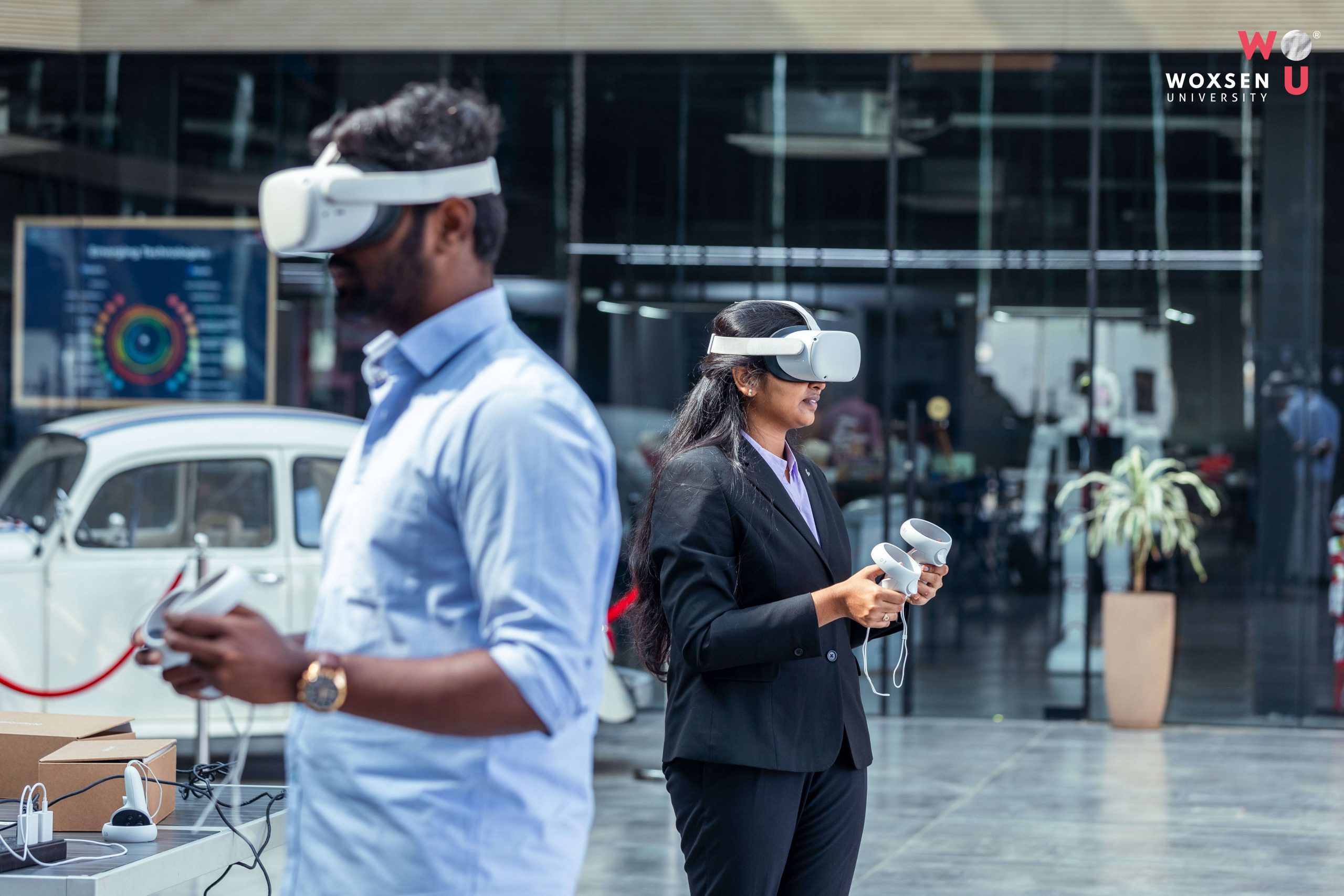
The future of work belongs to students who can think beyond one subject. India’s career landscape is changing quickly. Employers now value adaptability, applied learning, and cross-functional thinking alongside subject expertise. As industries evolve, students need education that connects ideas, skills, and real-world relevance. That is why private universities are investing in flexible and modern learning models. Across sectors, interdisciplinary programs in India are helping students prepare for broader and stronger career pathways. This shift matters most after Class 12, when course choices begin shaping long-term opportunities.
The old model of one degree leading to one fixed job is fading. Today’s students enter a world influenced by AI, entrepreneurship, sustainability, policy shifts, and global collaboration.
As a result, many careers are now hybrid. A business graduate may need data skills. A designer may need management knowledge. A law student may need policy awareness and digital literacy.
This is where private universities gain importance. They can create flexible academic systems where students explore subjects, choose electives, and prepare for changing industries with greater confidence.
Interdisciplinary education brings together learning from more than one field. Instead of studying in silos, students combine subjects to solve problems in practical and relevant ways.
For example, a student may study business with technology. Another may combine design and management. Others may explore law with policy, or science with data and analytics.
In simple terms, this model reflects how the real world works. Most industries do not operate within strict subject boundaries, and modern education should not either.
Interdisciplinary learning helps students build skills that remain useful across sectors. It strengthens creativity, analytical thinking, communication, leadership, and decision-making.
It also develops adaptability. Students who pursue multidisciplinary programs in India often learn how to work across ideas, tools, and teams. That ability becomes valuable in fast-changing workplaces.
Most importantly, this approach expands career flexibility. Students are not restricted to one narrow path. Instead, they gain options across roles, industries, and future specialisations.
These strengths support career-focused degree programs. They also explain the growing demand for future-ready undergraduate programs across India.
Interdisciplinary learning can strengthen many undergraduate pathways. It becomes even more effective when universities offer flexible curricula, electives, projects, and industry exposure.
A BBA course in Hyderabad becomes more relevant when paired with analytics, entrepreneurship, communication, or technology. Students gain core business knowledge while understanding how modern organisations operate.
This approach also supports leadership development. It helps students connect markets, people, operations, and innovation in one academic journey.
Engineering students need more than technical depth. Many of the top BTech colleges in India now recognise the importance of design thinking, business awareness, ethics, and sustainability.
That is why interdisciplinary models are becoming stronger. Technology students benefit when coding, innovation, research, and product thinking are linked to real-world problem-solving.
Communication and critical reasoning remain valuable in every sector. Many liberal arts colleges in Hyderabad stand out because they help students build perspective, creativity, and analytical depth.
Liberal arts also grow stronger when linked with media, psychology, economics, policy, or digital studies. This creates graduates who can adapt across industries and roles.
Science education is changing, too. Some of the top BSc colleges in India now combine core science with research tools, computing, and applied analytics.
This makes graduates better prepared for research, laboratory work, health innovation, environmental studies, and data-led scientific careers.
A BA Hons course can lead to much more than traditional academic pathways. When combined with communication, psychology, economics, policy, or media, it becomes highly relevant to current career needs.
This creates pathways into consulting, research, development, communication, public affairs, and the creative economy.
The demand for legal professionals with a wider awareness is increasing. Many integrated law courses in India now combine legal education with business, humanities, governance, and policy.
This helps students understand law within larger social and economic systems. It also supports careers in corporate law, compliance, governance, and public service.
Architecture is interdisciplinary by nature. The top architecture colleges in India often combine design, planning, sustainability, technology, and user experience within the learning process.
That helps students think beyond structures alone. They learn how spaces influence communities, cities, and the future environment.
Management education also benefits from broader academic design. Several top management colleges in Telangana are moving toward models that combine business, analytics, behavioural skills, and innovation.
This is useful for students seeking early industry readiness. It supports both employability and long-term leadership potential.
Interdisciplinary education creates clear career advantages. It improves employability because students can contribute across functions instead of staying limited to one narrow role.
It also expands career options. Students in interdisciplinary undergraduate programs often discover adjacent interests and opportunities during their academic journey. This makes course selection after school more strategic.
There is also a strong industry benefit. Employers increasingly want graduates who understand business, technology, communication, and social impact together. That is why multidisciplinary courses after 12th are drawing more attention from students and parents.
For students planning long-term careers, these outcomes matter. They support resilience in uncertain markets and open doors across industries.
Students should first look at curriculum flexibility. A strong program should allow meaningful choices across electives, minors, projects, and practical learning formats.
Industry exposure also matters. Internships, live projects, labs, and expert interaction make classroom learning more useful. Research opportunities add depth and confidence.
Placement support is equally important. The right university should connect students with mentors, employers, and real-world learning from an early stage.
Students should look for:
These qualities define the strongest future-ready undergraduate programs. They also help students identify meaningful multidisciplinary programs in India that support both immediate and long-term goals.
As this change becomes more visible, students need institutions that do more than offer degrees. They need universities that create connected learning ecosystems and prepare them for complex careers.
Woxsen University presents itself as a globally oriented and industry-aligned institution with innovative, internationally aligned degree programs designed to build contemporary global careers and life skills. The website also highlights applied learning, global outlook, diversity, industry connection, and world-class infrastructure as core parts of the student experience.
The university showcases a broad ecosystem across business, technology, design, liberal arts, law, architecture, science, and management. It further strengthens this positioning through advanced labs, research centres, and over 175 partnerships across 53+ countries.
For students exploring interdisciplinary programs in India, this model is highly relevant. It aligns academic learning with innovation, practical exposure, international perspective, and career readiness.
At Woxsen University, we believe future careers demand more than subject depth. Our learning environment helps students connect disciplines, apply knowledge, and grow into globally aware professionals.
We bring together business, technology, design, liberal arts, law, architecture, science, and management in one dynamic ecosystem. Through applied learning, industry engagement, global partnerships, and research-driven experiences, we prepare students for meaningful and evolving careers.
How does Woxsen University support interdisciplinary learning?
Woxsen University supports interdisciplinary learning through diverse schools, applied pedagogy, advanced labs, global collaborations, and industry-linked curricula that help students connect theory with practical career outcomes.
Why is Woxsen University relevant for future careers?
Woxsen University emphasises innovation, international exposure, research, and industry readiness. This approach helps students prepare for modern roles that demand adaptability, problem-solving, and cross-functional thinking.
Which students benefit most from Woxsen University’s model?
Students seeking flexible learning, practical exposure, and ambitious career preparation can benefit strongly. This includes learners interested in business, technology, design, law, science, humanities, architecture, and management.
Interdisciplinary education is shaping careers because employers now need graduates who can think across boundaries. Students need relevance, agility, and applied capability, not just isolated subject knowledge.
For students exploring broad and ambitious undergraduate pathways, Woxsen University reflects the direction modern higher education must take. Its integrated academic ecosystem makes it a strong choice within India’s evolving learning landscape.
Explore Woxsen University for interdisciplinary programs in India.