The cities of tomorrow are being designed today, and every architect holds the power to change what they look like.
Climate change is no longer a distant projection; it is a reality. It is here, reshaping coastlines, flooding urban centres, and exposing the fragility of conventional construction. Buildings and infrastructure account for nearly 40% of global carbon emissions. That is not a minor footnote.
That is a crisis, and it has a solution shaped by its architect.
Climate-responsive design has shifted from a specialist niche to an absolute necessity. The architect who understands this shift is not just creating beautiful spaces. They are building a liveable future for millions.
So, what does it truly mean to design for climate? And how does education shape the architect of tomorrow? Let’s find out.
Cities are among the most vulnerable places on Earth right now. Urban heat islands trap warmth long after sunset. Irregular monsoons cause flooding in areas never designed to manage it. Coastal cities face storm surges and rising sea levels.
Buildings are both the cause and the casualty. They consume energy, generate emissions, and often do little to offset their impact. However, when an architect approaches design with climate intelligence, the equation changes entirely.
A thoughtfully designed building can cool itself naturally. It can harvest rainwater, generate clean energy, and dramatically reduce its carbon footprint. The difference lies in how the architect thinks, and that thinking begins in the classroom.
Climate-responsive design is the practice of creating built environments that actively respond to local climate conditions. It considers wind direction, solar angles, humidity, and temperature variations. The goal is to reduce energy dependence while improving comfort and long-term resilience.
It is not a passing trend. It is a fundamental rethinking of what architecture is for.
Key principles include:
Each of these principles demands that the architect understand both design and environmental science. Consequently, B. Arch or Bachelor of Architecture programs are evolving rapidly to include sustainability at their core: not as an elective, but as a foundational requirement.
| Design Element | Function | Environmental Benefit |
| Passive Solar Design | Harnesses sunlight for heating and lighting | Reduces energy consumption |
| Green Infrastructure | Vegetation integrated on roofs and facades | Lowers the urban heat island effect |
| Natural Ventilation | Strategic openings for unassisted airflow | Minimises mechanical cooling need |
| Rainwater Harvesting | On-site collection and water-reuse systems | Conserves freshwater resources |
| Sustainable Materials | Low-carbon, locally sourced construction options | Cuts construction-related emissions |
A smart city is data-connected, digitally managed, and designed to improve the quality of urban life. But the smartest city on paper is meaningless if it cannot withstand extreme heat or heavy flooding.
This is precisely where the architect becomes indispensable. An architect trained in climate-responsive design can:
Furthermore, top B. Arch colleges in India and top architecture colleges in India are now integrating smart city planning, environmental science, and digital modelling tools into their core curriculum. Students learn to design not just for today but for the next fifty years.
The role in this context is not simply that of a designer. A climate-aware professional is also a planner, a systems thinker, and a futurist.
A B. Arch degree is a rigorous five-year program that blends design theory with technical precision. The B. Arch subjects span a broad spectrum: from architectural history and design studios to structural engineering, environmental studies, and urban planning.
These subjects prepare students to think holistically about design and environment. Without this foundation, practice remains reactive rather than responsible.
| Subject | Relevance to Climate-Responsive Architecture |
| Environmental Architecture | Passive design strategies and energy efficiency principles |
| Structural Design | Resilient, durable, and sustainable building systems |
| Urban Design & Planning | Smart city frameworks and liveable city models |
| Building Materials | Low-carbon, locally available material selection |
| Climate & Comfort Studies | Thermal, acoustic, and visual comfort in design |
| Digital Design Tools | BIM, parametric modelling, and climate simulation software |
India is urbanising at an extraordinary pace. The numbers say it all: by 2030, over 500 million people will live in Indian cities.
India ranks among the most climate-vulnerable nations globally. Extreme heat events, unpredictable monsoons, and coastal erosion are no longer future projections: they are present-tense emergencies.
The demand for architects trained in sustainable and climate-responsive design is surging.
Therefore, graduates who deeply understand climate-responsive architecture are not just employable; they are urgently needed. This is why choosing from the top architecture colleges in Hyderabad or top B. Arch colleges in Hyderabad is a decision that shapes both individual careers and entire communities.
At Woxsen University, we believe that architecture is not just a profession; it is a responsibility. And we are built to prepare you for every dimension of it.
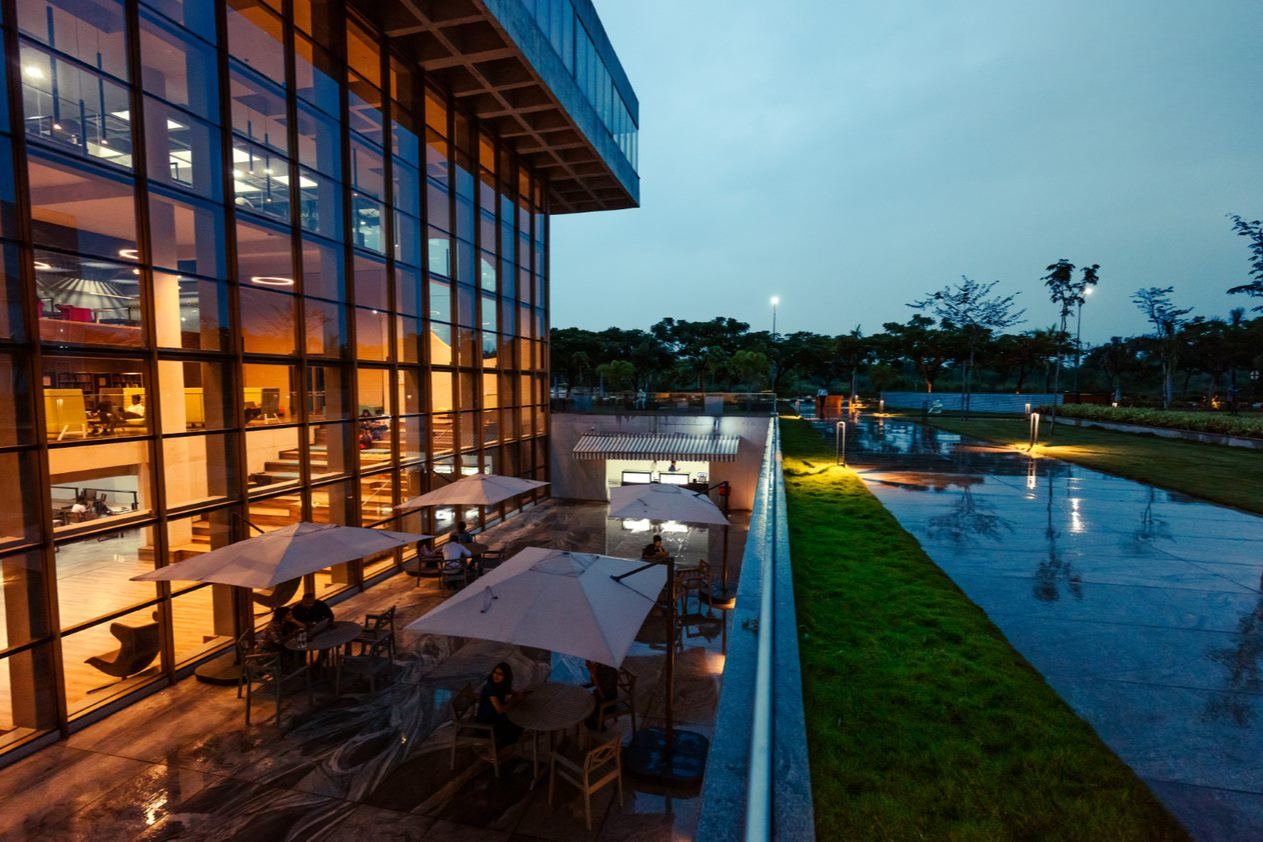
Our COA-accredited, five-year B. Arch bachelor of architecture program brings together design theory, environmental science, and cutting-edge digital tools. Our 200-acre campus, one of the most thoughtfully designed in India, is itself a working model of sustainable planning. From state-of-the-art design studios to digital fabrication labs and climate simulation tools, every resource here is built to sharpen the architect in you.
Woxsen University brings decades of real-world architectural practice. Moreover, you will work on live studio projects, collaborate with industry professionals, and access international exchange opportunities through our 175+ global partnerships.
Woxsen University is consistently recognised among the top B. Arch colleges in Hyderabad and the top architecture colleges in Hyderabad. Whether you are weighing B. Arch course fees or clarifying B. Arch course eligibility, we have the answers and the environment you need.
We do not just train architects. We prepare the architect for the future cities that actually demand. Ready to build tomorrow? Explore B. Arch at Woxsen University.
Climate change is not a design problem for the next generation. It is a mandate for this one.
Cities are expanding faster than ever. The pressure on architects to create resilient, sustainable, and intelligent urban spaces is unprecedented. Every building that rises today either adds to the problem or contributes meaningfully to the solution.
The architect of the future is a guardian of communities, an innovator of systems, and a steward of the environment. This demands education that goes beyond drafting tables: institutions that challenge deeply and prepare thoroughly.
Whether you are exploring B. Arch colleges, comparing B. Arch course eligibility, considering B. Arch course fees, or simply searching for B. Arch colleges near me, the most critical question remains: Does this institution prepare you for the world that actually exists?
Because that world needs climate-smart architects. Now more than ever.
B.Arch course eligibility requires passing Class 12 with Physics, Chemistry, and Maths, scoring at least 50%, and qualifying for a national entrance exam such as NATA or JEE Paper 2.
B. Arch course fees at Woxsen University vary by year and scholarship eligibility. Visit the official admissions page for the latest fee structure, financial aid, and scholarship deadline details.
B. Arch subjects include architectural design, environmental studies, structural systems, urban planning, history of architecture, building materials, and digital tools like BIM and parametric modelling.
Yes. Woxsen University is consistently ranked among the top B. Arch colleges in Hyderabad for academic excellence, industry exposure, sustainability-focused curriculum, and world-class design infrastructure.
Among architecture colleges across India, Woxsen University is distinct for its COA accreditation, strong industry integration, international exposure through global partnerships, and emphasis on climate-responsive design.
Absolutely. A B. Arch Bachelor of Architecture opens pathways into smart city planning, sustainable urban design, and infrastructure development: all high-demand career sectors in India and globally.