FTSC 2027

(Fashion for Regenerative Future)
February 25-26, 2027

  • Organized by

  • School of Arts and Design,
    Woxsen University, Hyderabad, India
  • Date

  • February 25-26, 2027
  • Mode : Physical & Virtual

Knowledge Partners

Important Dates

Submission of Abstracts
30 June 2026
Notification of
accepted abstracts
15 July 2026
Submission of
full papers
31 August 2026
Notification of
accepted papers
15 September 2026
Submission of the
camera ready papers
12 October 2026
Registration
Date
15 October 2026
About FTSC-2027 About Woxsen SOAD Conference Themes Subthemes & Tracks Abstract Submission Paper Submission Registration

The 4th edition of the Fashion as a Tool for Social Change (FTSC–27) conference brings together academicians, researchers, designers, industry professionals, policymakers, and craft practitioners to examine the evolving role of fashion in society. Organized by the School of Arts and Design, Woxsen University, FTSC–27 continues its commitment to positioning fashion as a discipline that contributes meaningfully to social, cultural, economic, and environmental development.

FTSC–27 builds upon the achievements of previous editions and moves the discussion toward practical and research-driven solutions. The conference focuses on how fashion can respond to contemporary global challenges such as climate change, resource depletion, cultural erosion, technological transformation, and social inequality.

A key emphasis of FTSC–27 is regenerative and circular practice. The conference encourages research on sustainable materials, responsible production systems, zero-waste design, and circular economy models that reduce environmental impact and promote long-term ecological balance.

The conference also highlights the importance of preserving cultural heritage. It supports dialogue on reviving indigenous crafts, promoting ethical collaborations between designers and artisans, and ensuring cultural authenticity in contemporary design practices.

Technology is another important dimension of FTSC–27. The conference explores the responsible use of Artificial Intelligence (AI), blockchain, digital fashion platforms, and wearable technologies to enhance transparency, efficiency, and creative processes, while also addressing ethical and social concerns. Inclusivity and social empowerment remain central themes. FTSC–27 encourages discussions on adaptive fashion, gender-inclusive design, equitable representation, and economic empowerment through entrepreneurship and skill development.

By integrating academic research with industry practice and policy dialogue, FTSC–27 aims to create a collaborative platform that supports innovation, accountability, and measurable impact. The conference reaffirms that fashion is not only about aesthetics and commerce, but also about cultural dialogue, environmental responsibility, and social progress.


Objectives

  • Promote regenerative and circular fashion through sustainable materials and zero-waste systems.
  • Encourage responsible use of AI, blockchain, and digital tools in the fashion industry.
  • Support the preservation of indigenous crafts and ethical collaborations.
  • Advance inclusive, adaptive, and socially responsive design practices.
  • Strengthen entrepreneurship, craft development, and policy dialogue to support equitable growth

The School of Arts and Design (SOAD) stands as a hub of creative excellence and socially responsive design education. Ranked #2 in India and #1 at the state level by IIRF 2025, SOAD redefines design as a powerful tool for innovation and social impact. Its pedagogy integrates sustainability, interdisciplinary thinking, and strong industry alignment, enabling students to address complex global challenges through design-led solutions.

At SOAD, students are nurtured as critical thinkers and responsible practitioners, equipped with research capabilities, market awareness, and cultural sensitivity. The curriculum blends craft, technology, and real-world engagement, encouraging learners to see design not merely as aesthetics, but as a medium for meaningful change. In the context of global conversations such as fashion as a tool for social cause, SOAD continues to champion design as a transformative force—shaping individuals who contribute thoughtfully to society and the creative economy.

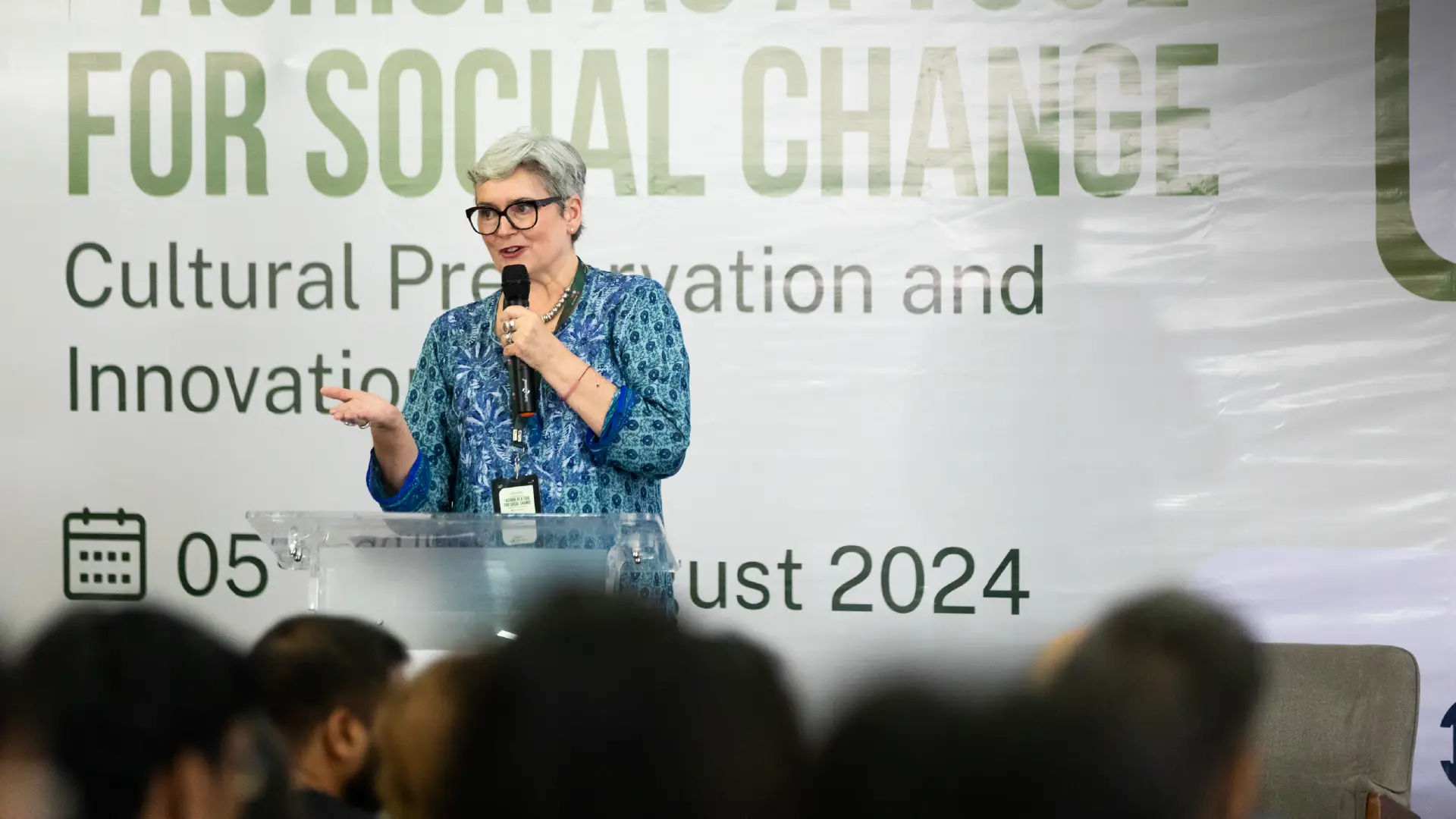
Building upon the success of FTSC 2023 and 2024, which explored "Fashion as a Tool for Social Change: Cultural Preservation and Innovation," and FTSC 2025, which advanced the vision of "Fashion as a Visionary Tool for Societal Impact: Innovating the Present, Preserving the Future," FTSC 2027 moves the dialogue further by introducing the theme:

Fashion as a Regenerative System: Designing Equity, Technology, and Culture for a Resilient Future This theme reflects the growing need to move beyond sustainability toward regeneration. While sustainability focuses on reducing environmental harm, regeneration emphasizes restoring ecosystems, strengthening cultural systems, and building equitable economic structures. FTSC 2027 encourages participants to critically examine how fashion can function as a responsible and accountable system that contributes to long-term social and environmental resilience.

The theme aligns with urgent global priorities, including climate responsibility, ethical production, digital transformation, and social equity. It highlights fashion’s capacity to integrate traditional knowledge with contemporary innovation, ensuring that progress does not come at the cost of cultural integrity or ecological balance.

FTSC 2027 will emphasize the role of fashion and textiles in:

  • Developing circular and climate-responsive design systems
  • Preserving and revitalizing indigenous crafts and cultural narratives
  • Integrating emerging technologies such as AI and blockchain responsibly
  • Promoting inclusivity, diversity, and adaptive design
  • Creating fair and transparent economic models

By introducing focused subthemes and research tracks, the conference seeks to strengthen academic inquiry and industry collaboration. FTSC 2027 aims to redefine fashion as a structured, regenerative, and socially responsive discipline capable of shaping a more equitable and resilient future.

Abstracts from students and researchers are invited in the form of oral and poster presentations. All those desirous of participating and/or presenting in the conference are requested to complete the online abstract submission. Authors are requested to send one-page abstract in the prescribed format as given.


All selected Abstracts for FTSC 2027 conference will be published in a Book of Abstracts with an ISBN number.

Selected papers from the FTSC 2027 conference will be published by TEXTILE: Cloth and Culture Journal (SCOPUS, Q2) and Springer as a Proceedings book volume (SCOPUS).

Fashion as a Regenerative System: Designing Equity, Technology, and Culture for a Resilient Future

Regenerative Textiles and Climate-Responsive Design

  • Bio-based and biodegradable materials
  • Circular production systems
  • Zero-waste pattern engineering
  • Life Cycle Assessment (LCA) and impact measurement
  • Carbon-neutral and climate-positive models

Track 1

Digital Innovation and Intelligent Fashion Systems

  • AI-assisted design and forecasting
  • Blockchain for supply chain transparency
  • Digital fashion and virtual platforms
  • Wearable technologies for health and social good
  • Ethical implications of automation

Track 2

Cultural Narratives and Heritage Futures

  • Revival and documentation of indigenous crafts
  • Ethical designer–artisan collaborations
  • Cultural authenticity and intellectual property
  • Craft cluster development and policy engagement

Track 3

Inclusivity, Diversity, and Social Justice

  • Adaptive fashion for persons with disabilities
  • Gender-fluid and body-inclusive design
  • Representation in fashion media and communication
  • Fashion as activism and community engagement

Track 4

Circular Economy and Entrepreneurship

  • Repair, reuse, resale, and rental ecosystems
  • Social enterprises and rural innovation models
  • Fashion incubation and start-up development
  • Labour rights and regulatory frameworks

Track 5

Participants whose abstracts have been selected are requested to submit their full papers through the link provided below, following the prescribed format.

Paper Template

FTSC-27 Paper Template

Full Paper Submission

FTSC-27 Paper submission link

Publishing Partner

Selected papers from FTSC 2027conference will be published by

1. TEXTILE: Cloth and Culture Journal (SCOPUS, Q2) and
2. Springer as a Proceedings book volume (SCOPUS)

Conference Registration

For any registration and payment related queries, mail to ftsc2027@woxsen.edu.in with the subject line: Registration related.

Registration Details
  • Each individual who wishes to attend FTSC-27 needs to register by filling out the registration form (see further below) and by paying the registration fee (for exceptions, see point 4. below). The type of registration fee will be decided by the affiliation and not nationality.
  • For each paper, at least one author must register by paying the registration fee.
  • A single registration fee can be used by an author for up to two of his/her papers. If an author has more than two papers, he/she needs to pay separate registration fees for the additional papers.
  • Invited delegates still need to fill-out the registration form but do not need to pay the registration fee (except in some cases, see Q.9 in FAQ below). See FAQ below for more clarification.

The registration fee includes:
  • An electronic copy of the conference proceedings book from Springer, and the TEXTILE: Cloth and Culture Publication
  • Conference Kit including conference documents for offline presenters
  • Access to all events in the conference programme
  • Conference dinner
  • Tea/coffee, snacks and lunch on all days of the conference

* The final registration amount in INR adds 18% GST. The rate in the table includes GST.

Early Bird (Before 15 Oct 2026)

Academics,Corporate,
Participants

India: Rs. 7000 (GST included)

International: $76

India (Online): Rs. 6000 (GST included)

International (Online): $65

Students

India: Rs. 5000 (GST included)

International: $54

India (Online): Rs. 4000 (GST included)

International (Online): $43

After 15 Oct 2026

Academics,Corporate,
Participants

India: Rs. 8500 (GST included)

International: $92

India (Online): Rs. 7000 (GST included)

International (Online): $76

Students

India: Rs. 6000 (GST included)

International: $65

India (Online): Rs. 5000 (GST included)

International (Online): $54

Mode of payment

The ‘register now’ button takes you to the google form and the payment mode (also given below).
Registration Link

Panel Discussions

Panel - 1 Panel - 2

Panel 1: Regenerative Fashion Systems: Climate, Craft, and Circularity

Fashion today must move beyond sustainability toward regeneration, where systems not only reduce harm but also restore the environment and support communities. This includes the use of circular design, eco-friendly materials, and traditional craft knowledge.

In the context of climate change and cultural loss, regenerative fashion offers a way to connect environmental responsibility with cultural preservation. This panel will discuss how fashion can develop more responsible and resilient systems.

The panel will have about 6–8 members (including researchers, designers, and craft experts). The discussion will focus on the following questions:

Key Discussion Questions:

1. What is the difference between sustainable and regenerative fashion?
2. How can traditional crafts support climate-responsive design?
3. What are the challenges in adopting circular systems?
4. How can we measure the impact of regenerative practices?
5. What role can policy play in supporting such systems?

Panel 2: Digital Fashion Futures: AI, Ethics, and Inclusive Innovation

Digital technologies such as AI, blockchain, and virtual platforms are changing the fashion industry. These tools can improve design, production, and transparency, but they also raise ethical and social concerns. It is important to ensure that technology supports fairness, inclusivity, and responsible practices. This panel will explore how digital innovation can be used in an ethical and inclusive way in fashion.

The panel will have about 6–8 members (including technology experts, designers, and researchers). The discussion will focus on the following questions:

Key Discussion Questions:

1. How can AI support designers without replacing human work?
2. What ethical issues arise from digital fashion technologies?
3. Can blockchain improve transparency in supply chains?
4. How can technology support inclusive fashion design?
5. What role should policy play in regulating these technologies?

Authors & Chairs

Information For Presenters

  • Each paper is slotted for presentation in a specific session and has 12 minutes for presentation, 6 minutes for presenting, 5 minutes for Q&A, and 1 minute for changeover. At the end of presentation of all six papers, up to 10 minutes is kept for general discussion and closure.
  • The papers are to be presented using PowerPoint or PDF format.
  • The speakers should arrive at the venue for their session at least 15 minutes before the start of the session.
  • A system (windows) and LCD projector will be available to use for paper presentations.
  • Speakers should load/check their presentation slides onto the computer.
  • All speakers should adhere strictly to the time allotted to their presentation.
  • Organizers will be around to help with the presentation.
  • We recommend that each presenter limits the number of slides in a presentation to 12, assuming that each slide takes 1 min to present.
  • In case a presenter fails to present during the allotted slot, the paper will not be included in the proceedings.
Instructions for Keynote Presentations Instructions for Panel Discussion Information for Chairs Instructions for Keynote Sessions
  • Each keynote presentation is scheduled for 40 mins. Most keynote presentations are scheduled with two/three back-to-back keynote talks.
  • Each keynote presentation should last for at most 30 mins., leaving 10 min for introduction to speaker, Q&A and changeover.
  • The talks are to be presented using Microsoft PowerPoint or PDF. For Apple, the presenters need to bring own laptop and adapter for projection.
  • The speakers should arrive at the venue for the keynote session at least 25 minutes before the start of the session, meet the session chair, and load/check their presentation slides onto the computer.
  • All speakers should adhere strictly to the time allotted to their presentation.
  • Computer and LCD projector will be available for use for podium presentations. Incase a speaker is not carrying a laptop, organizers’ computer can be used.
  • FTSC-27 has one Panel Discussions (1-hour duration each).
  • There will be 6-8 panelists, with one of them acting as the Chair of the panel.
  • Each panelist should be present at the venue for the panel session at least 25 min. before the start of the session, introduce themselves to the chair of the panel.
  • The chair will first introduce the panelists and the topic, and then invite each to make a brief statement (3-5 min.) on his/her experience/views of the opportunities and challenges in the given topic.
  • After this, the discussion will be opened to the floor with moderated interaction with the panel.
  • No panellist is expected to make a formal presentation (via visual aids).
  • Each paper is slotted for presentation in a specific session and has 15 minutes for presentation, 5 minutes for Q&A, and 1 minute for changeover. At the end of presentation of all six papers, up to 10 minutes is kept for general discussion and closure.
  • There will be one chair for each paper presentation session.
  • The chair will be invited to the podium session by the organizer of the session.
  • The chair should remind the authors of the time allotted (15 mins for presentation and 5 mins for discussion and changeover).
  • At the beginning of each podium presentation, the chair(s) should briefly announce the title of the paper, and name & affiliation of the authors and speaker.
  • A volunteer will be available to keep time and show the speaker and the chair the time remaining with three placards: 5 min., 2 min., and 0 min. for the chair to use to remind the speakers of the time.
  • The chair(s) should invite the audience for questions if time permits, and if no questions are forthcoming, ask questions to the speaker(s), before concluding the presentation.
  • At the end of the session, the chair(s) should announce the audience of the next session and pass on the podium to the session organizer.
  • There will be a single chair for each keynote session.
  • The chair will be invited to the keynote session by the organizer of the session.
  • The chair should remind the speaker of the time allotted (at most 30 min. for presentation, with up to 5 min. for questions or discussions at the end).
  • The chair should announce the title of the keynote address and introduce the speaker in some detail.
  • Volunteers will be available to keep time and show the speaker and the chair the time remaining, with three placards: 5 min., 2 min., and 0 min. for the chair to use to remind the speakers of the time.
  • At the end of the whole session, the last chair should announce the audience of the next session and pass on the podium to the session organizer.
  • There will be a single chair for each panel discussion.
  • FTSC-27 has two Panel Discussion sessions (1-hour duration each).
  • The chair will be invited to the Panel Discussion by the organizer of the session.
  • The other panelists will also be invited to the Panel Discussion by the organizer of the session.
  • The chair should first introduce the other panelists and the topic of the panel, and then invite each panelist to make a brief statement (3-5 min.) on the topic.
  • After this, the chair should open discussion to the floor and moderate the interaction with the panel.
  • At the end of the session, the chair should announce the audience of the next session and pass on the podium to the session organizer.

Travel and Stay

Any queries related to accommodation, please e-mail to ftsc2027@woxsen.edu.in with the subject line: Accommodation.

Woxsen University address:

Campus. Kamkole, Sadasivpet, Sangareddy District, Hyderabad - 502 345, Telangana, India.

Conveners

CHIEF PATRON

Dr. Raul V. Rodriguez

Vice President,
Woxsen University

CONVENOR

Dr. Adity Saxena

Dean, School of Arts & Design,
Woxsen University

CONVENOR

Dr. Sadhna

Associate Professor, School of Arts & Design, Woxsen University

International Advisory Board Members

Serkan Delice

London College of Fashion, Ual

Dr. Patsy Perry

The Manchester Metropolitan University, UK

Dr Guolong Zhong

Suzhou City University, China

Mikah Man Zhao

Birmingham City University, England

Dr. Anupama Pasricha

St. Catherine University, United States

Dr. Claudia E. Henninger

The University of Manchester, England

Prof. Ella Emanuele

The British University in Egypt, Egypt

Dr. Aravin Periyasamy

VTT Technical Research Centre of Finland

Suada Tivari, SFHEA

The British University in Egypt, Egypt

Dr.Francesco Mazzarella

London College of Fashion, Ual

Prof. Fiona Hackney

The Manchester Metropolitan University, UK

Prof. Samah Nassar

The British University in Egypt, Egypt

Dr Benedicte Brahic

The Manchester Metropolitan University, UK

Prof. Ahmed Elseragy

The British University in Egypt, Egypt

Rachel Kelly

The Manchester Metropolitan University, UK

Prof Doaa Ayoub (BAEPS)

The British University in Egypt, Egypt

Dr Elizabeth Kealy-Morris

The Manchester Metropolitan University, UK

Dr. Noha Fawzy

The British University in Egypt, Egypt

Professor Gianpaolo Vignali

The Manchester Metropolitan University, UK

Professor Catherine Harper

The British University in Egypt, Egypt

National Advisory Board Members

Dr. Toolika Gupta

Indian Institute of Crafts & Design (IICD) Jaipur,
Rajasthan

Dr. Prakash C

Indian Institute of Handloom Technology (IIHT) in Fulia, West Bengal

Dr. Arun Kumar

Weavers' Service Centres (WSCs),
Hyderabad

Dr.Shakeel Iqbal

National Institute of Fashion Technology,
Hyderabad

Prof. Pratibha Mishra

Manipal University, Jaipur

Prof. Jay Patel

Banasthali Vidyapith, Tonk, Jaipur

Dr. Jyoti Saini

ATLAS SkillTech University, Mumbai

Dr. Seiko Jose

ICAR- Central Sheep and Wool Research Institute Avikanagar, Rajasthan

Dr. Sunita Boruah

Department Textiles and Apparel Designing, Assam Agricultural University

Dr. Rena Mehta

Indian Institute of Crafts & Design (IICD) Jaipur, Rajasthan


Dr. Vinod Kadam

ICAR- Central Sheep and Wool Research Institute Avikanagar, Rajasthan


Dr. Ritu Pandey

Department of Textiles & Clothing, Chandra Shekhar Azad University of Agriculture and Technology Kanpur

Dr. Mamoni Borha

Department of Textile and Apparel Designing, Central Agricultural University (I) Tura, Meghalaya

Dr. Prashansa Sharma

Department of Home Science, MMV, Banaras Hindu University (BHU), Varanasi

Dr. Ashish Bhardwaj

The Technological Institute of Textile & Sciences, Haryana

Dr. Peeyush Gupta

ATLAS SkillTech University, Mumbai


Aniket Gajbhiye

Textile Engineering Department, Veermata Jijabai Technological Institute (VJTI), Mumbai, Maharashtra

Dr. Babita Bhandari

Department of Textile Design at the National Institute of Fashion Technology (NIFT), Kangra, Himachal Pradesh

Dr. Surabhi Mahajan

Department of Apparel and Textile Science, Punjab Agricultural University, Ludhiana


Dr. Anita Rani

Department of Clothing and Textiles, G.B. Pant University of Agriculture and Technology, Pantnagar, Uttarakhand

Dr. Pratima Goyal

Department of Textile and Fashion Technology, Nirmala Niketan, Mumbai


Dr. Chavi Goyal

Department of Textile Design at the National Institute of Fashion Technology (NIFT), Panchkula

Dr. Vandana Gupta

Department of Fashion Design, Chitkara University, Chandigarh

Dr. Meeta Siddhu

Symbiosis Institute of Design, Pune


Dr. Jyoti Chhabra

Graphic Era Hill University, Dehradun


Dr. C. Manjulatha

Department of Apparel and Textile Science, Acharya N. G. Ranga Agricultural University

Dr. Reena Bhatia

Department of Clothing and Textiles, The Maharaja Sayajirao University of Baroda, Vadodara

Dr. Manjali Sharma

Department of Fashion Designing, Veer Narmad South Gujarat University

Dr. L Ammayappan

ICAR–National Institute of Natural Fibre Engineering and Technology, Kolkata, Weste Bengal

Dr. Pavan M

NITTE School of Fashion and Apparel Design, NITTE (Deemed to be University), Bengaluru

Dr. Sirisha Deepthi Sornapudi

Department of Apparel and Textiles, College of Community Science, PJTSAU, Hyderabad

Dr. S. Aishwariya

National Institute of Fashion Technology (NIFT) Chennai

Dr. Bhawana Chanana

Amity School of Fashion Technology, Amity University, Mumbai

Dr. S. Kubera Sampath Kumar

Vignan's Foundation for Science, Technology and Research (Deemed to be University)

Dr. Deepshikha Sharma

Manipal University, Jaipur


Dr. Ranjana Upadhyay

Sarojini Naidu Govt Girls' Post Graduate College, Bhopal

Prof. Anshuman Dey

Army Institute of Fashion & Design, Bengaluru


Dr. Rajni Yadav

The Maharaja Sayajirao University of Baroda, Vadodara, Gujarat

Conference Organising Team

Dr. Rajesh Kumar

Prof. Bhushan Sonawane

Prof. Eesha Sharma

Dr. Divya Gauri

Prof. Arun Gupta

Dr. Murali V Kesaboina

Dr. Mahima Nand

Dr. Gajanan Kulkarni

Prof. N. Kamal Vas

Prof. Ashutosh Kumar

Prof. Arun Kumar Gaikwad

Prof. Srijana Baruah

Prof. Tejas Eknath Pawar

Conference Registration FAQs

Each of those who wish to participate in the conference will have to register by paying the full conference fee separately. In your case, three separate registrations are required.
You only need to pay the registration fee once if the presenter is the same. However, if there are different presenters, then two separate registrations are required even if the authors are same.
No, you need to register by paying the registration fee twice, one fee to cover two papers if the presenter is the same and the other to cover the remaining paper. if there are different presenters, then three separate registrations are required even if the authors are same.
You need to pay the registration fee twice covering two papers each if the presenter is the same. However, if there are different presenters, then four separate registrations are required even if the authors are same.
A total of two registrations will be required (one registration fee per person).
If you have affiliation with a foreign institution/ organization, you need to register under the international category irrespective of your nationality. Similarly, if you are affiliated with an Indian institution or organisation, you should pay the registration fee applicable to Indian participants, irrespective of your nationality.
Each participant has to pay a registration fee as per the type of affiliation (Indian/ SAARC or International) of the participant. Kindly note that your co-author does not require to pay extra page charges (if applicable for the paper) if you have already paid these charges in your registration.
If you are a (co-)author of a paper to be presented at FTSC 2027 for which no other (co-)author has registered by paying the registration fee, you must register by paying the registration fee. If that is not the case (you have no paper to be presented at FTSC-2027 or your co-author has already registered for the paper by paying the registration fee), you do not need to pay any registration fee to attend the conference.
Yes, you can transfer your registration before the start of the conference. However, you need to inform the organisers at least one day before the beginning of the conference so that your registration is transferred to the other person.
No. Registration fees are not refundable.
You will receive the receipt of your registration fee on your registered email.
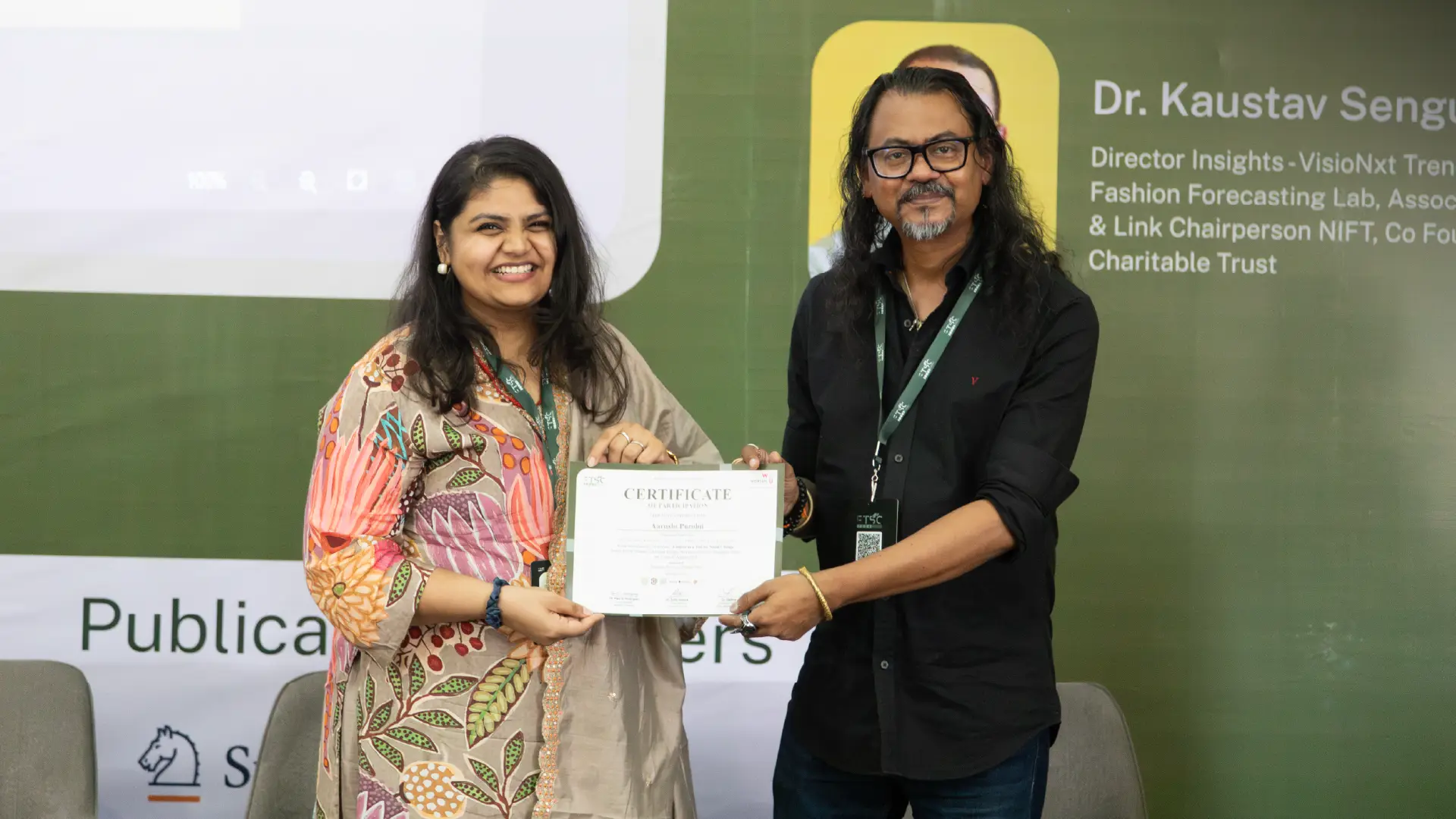
You will receive your e-certificate of participation within one week after the end of the conference, (For online participants) provided you have registered yourself and attended the conference.
Certificates will be issued in the presenter’s name (regardless of who made the payment), with the other authors listed as co-authors. If multiple registrations are received for the same paper, separate certificates will be issued to each registered participant for that paper.
Based on the registration category, designation will be provided.

About Woxsen University

Founded in 2014 as a School of Business, Woxsen has since expanded into

School of Arts & Design
School of Architecture & Planning
School of Technology
School of Liberal Arts & Humanities
School of Law
School of Sciences
The School of Business is EFMD-accredited for its MBA program, making us the youngest B-School to be conferred with memberships by the three largest global accreditation bodies – AACSB (USA), AMBA (UK), and EFMD (Brussels). We are currently progressing through the EQUIS and AACSB accreditation process.

Woxsen achieved University status in May 2020 and is among the first private universities in Telangana. Located on a 200-acre fully residential campus in Hyderabad, we house state-of-the-art facilities such as the Robotics Lab, Bloomberg Lab (one of the largest in Asia), AI Research Centre, and Behavioural & Analytics Lab. Alongside, our world-class sports infrastructure reflects our commitment to holistic education. Currently, Woxsen has over 5000 students enrolled.

Rankings & Recognition

  • QS World University Rankings: Asia 2026: #694 (Top 55 in Asia Southern Asia)
  • QS Sustainability Rankings 2026: #58 India, #481 Asia, #1301-1400 Global
  • QS Global MBA Rankings 2026: #5 India, #30 Asia (Top 200 Global)

QS Business Masters 2026:

  • Business Analytics: #3 India, #8 Asia, #151 Global
  • Finance: #1 India, #12 Asia, #201 Global
  • Management: #7 India, #15 Asia, #201 Global
  • Marketing: #1 India, #4 Asia, #151 Global
  • Operations & Supply Chain: #2 India, #7 Asia, #101 Global
  • QS Executive MBA Rankings 2025: #5 India, #27 Asia (APAC #191-200)
  • Poets & Quants 2026 MBA (Entrepreneurship): Only Asian school in Top 12 (#11)

THE Impact Rankings 2025:

  • SDG 4 (Quality Education): Top 100 Global
  • SDG 13 (Climate Action): #301-400 Global
  • SDG 7 (Clean Energy): #401-600 Global
  • RUR 2025 Overall: #19 India, #837 Global
  • WURI 2025: Top 400 Global (Innovative Universities)

Additionally, Woxsen debuted in the Bloomberg Businessweek 2025-26 Ranking as 3rd in India and 6th in Asia-Pacific.​

Key Institutional Pillars:

  • Internationalisation: 180+ partners across 50+ countries
  • Research: H-index 44, 11,468 citations, 1,169+ research articles, 56+ patents (2 granted)
  • Corporate Alignment: USD 20 Mn in consulting projects in the last six months
  • CSR: 250+ initiatives, including global community programs
  • Entrepreneurship: 25+ startups supported through our incubation centre

Keynote Speakers

Prof. Catherine Harper

Prof. Catherine Harper

British University in Egypt, Egypt

Prof. Catherine Harper

Prof. Lucy Orta

Londen College of Fashion, UAL


Prof. Catherine Harper

Gavin Douglas

Manchester Fashion Institute, Manchester Metropolitan University

Prof. Catherine Harper

Dr. Kaustav SenGupta

National Institute of Fashion Technology

Prof. Catherine Harper

Dr. Anupama Pasricha

St. Catherine University, Saint Paul, Minnesota, USA

Prof. Catherine Harper

Dr. Tanveer Ahmed

Central Saint Martins, UAL


Prof. Catherine Harper

Dr. Neelam Raina

Middlesex University London


Partners

FTSC in Motion: Building a Culture of Reflective Practice at School of Arts and Design Prof. Margaret Bishop at Woxsen University
Video Thumbnail
×
Video Thumbnail
×

The Venue

School of Arts and Design, Woxsen University, Telangana
Google Maps
 woxsen